

Iranian capitalism has transformed the daily life of the working class into an exhausting struggle for mere survival. Whenever the working class has turned this struggle into a collective endeavor, taking to the streets to voice its demands, it has been met with various forms of repression. This situation has not only persisted under wartime conditions but has actually intensified. The working class entered this war at a breaking point.
On one side, the Islamic Republic’s brutal neoliberal policies had already pushed them to the edge. This led to the December 2025 protests and the massacre that followed.
On the other side, imperialist forces are now dropping “humanitarian” bombs on the same class. Meanwhile, right-wing forces cheer for both sides.
In these circumstances, all labour, social, and political demands are marginalized and pushed aside in favour of the “current sensitive situation.” The wartime state of emergency is silently destroying the lives of vast groups of people, a destruction that finds no mention even in anti-war statements, let alone in the “Zionist-fascist” Persian-language media.
The destructive impacts of war and its aftermath fall hardest on the precarious sectors of the working class, including day labourers, street vendors, online business workers, and informal care, service, and cleaning workers. War does not occur solely on battlefields. It penetrates deeply into daily life, transforming economic relations, altering consumption patterns, and redistributing insecurity across the entire social structure. In capitalist societies, the effects of war and crisis are by no means distributed equally among social classes. Instead, war intensifies existing hierarchies, placing the heaviest burdens on those already in the most vulnerable positions within the labour market.
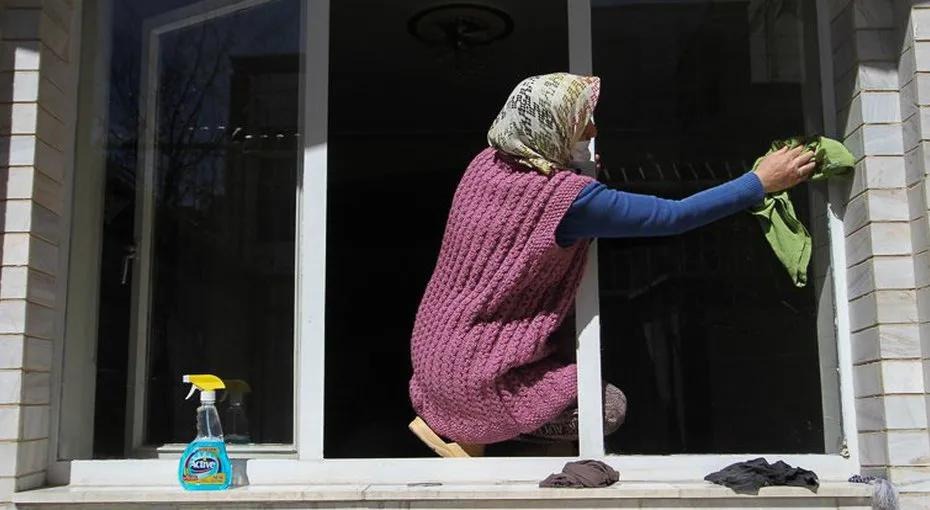
Among these vulnerable groups are precarious domestic cleaning workers whose livelihoods depend directly on the middle and capitalist classes. A worker comrade who has been working in the service and cleaning sector for several years, a field that, due to the social division of labour, is historically composed largely of women told us: “Most of our work as service workers increases in the two months leading up to the New Year (Nowruz). During this time, many workers come to Tehran from smaller towns to find work. In the current situation, with the outbreak of war, the work of many cleaners has practically shut down. Most clients for these services are from the affluent class, and many of them have left Tehran. Consequently, for a worker who has come from the smaller towns, it is not economically viable to do only two or three cleaning jobs a week, because almost all their income is spent on food and dormitory costs. Some who are caretakers or tenants in Tehran have been forced to stay, but their income has dropped so low that it barely covers basic expenses like food, let alone rent or transportation.”
The experience of domestic cleaning workers during wartime reveals a fundamental truth about the capitalist system. It shows how deeply daily life is shaped by class relations and how easily economic risks are shifted onto those with the least power. The capitalists who, in the current wartime conditions, have taken refuge in their villas in the north of Iran or in Turkey and are not hiring cleaners for spring cleaning this year, have only suffered a minor lifestyle change. But for the workers who perform this labour, these same conditions have wiped out their entire income overnight.
Our comrade who works as a cleaner says: “Finding clients isn’t easy for us. Most workers don’t have regular clients and are therefore forced to turn to cleaning companies or intermediaries that act like employment agencies. The main income of these cleaning companies comes from introducing clients to workers. They take a percentage of the amount the worker receives for each job as a commission. The problem is that these companies provide almost no services to the workforce. There is no insurance, no job security, no physical safety, and no support for problems that might arise on the job. If an accident happens to a worker, the companies accept no responsibility. Even if damage is caused to a client’s home during work, we have to pay the full cost ourselves. The only thing some companies do to attract more labour is provide dormitories for workers coming from other cities who have nowhere to stay. Of course, the cost of these dormitories is deducted from our earnings. The only difference between these and private dormitories is that they are slightly cheaper. The sanitary conditions in these dormitories are inadequate, and the company essentially provides these facilities only for its own profit, to attract more labour and take on more clients.”
Among service workers, some work in this profession year-round and have gradually built up a base of regular clients. These individuals are less dependent on companies and spend the money they used to pay as commission on expenses like transportation instead. However, workers without regular clients are forced to pay both the company commission and their own transportation costs out of pocket.
They added: “If this work were calculated hourly, it would be more profitable for the worker. But many companies offer services on a daily basis to attract customers. While a worker could earn about 1.5 million Tomans if they could clean three houses in one day, when they are forced to be at the disposal of a single client for a full day, their income drops to about 1 million Tomans. In fact, some companies spend from the worker’s pocket to keep the customer satisfied, but they aren’t willing to lower their own commission. Female service workers are also used extensively. Many clients prefer female cleaners, believing women are more meticulous in housework. Companies also take a lower commission from women to attract more labour. In return, they charge clients who request female labour a higher fee, so the company suffers no loss.”
Precarious cleaning workers are a concentrated manifestation of class relations. A significant portion of these workers comes from regions that have been economically marginalized due to the historical concentration of capital, uneven development, the destruction of local livelihood opportunities, dispossession, and a thousand other reasons. Seasonal migration from these areas to big cities is a direct result of this unequal structure. In such conditions, workers are forced to migrate to cities like Tehran for temporary income and work in jobs with the lowest levels of wages and job security. Alongside these seasonal migrants, a large portion of the cleaning workforce consists of the urban poor residents of peripheral neighbourhoods who are themselves the product of long processes of marginalization and economic exclusion. In recent years, this group of workers has become more dependent than ever on digital platforms and apps like Achareh, Khedmat Az Ma, Tamiz, etc. On one side of this relationship are the wealthy who can afford the services; on the other side are the workers who, to secure a minimum livelihood, must perform heavy physical labour and provide all their own means of production and reproduction from buying cleaning supplies to transportation costs and waiting time for jobs. They are constantly exposed to falls from heights and contact with chemical detergents like bleach, and they must bear the costs of illness and injury themselves. Cleaning companies and digital platforms act as intermediaries that, without participating in the actual labour, misappropriate a significant portion of the value produced in the form of commissions or fees from the worker’s wages. Ownership of these platforms is held by a small group of investors and company owners, while workers have no share in this ownership. They neither participate in the platform’s decision-making nor benefit from the data they generate, nor can they change the rules of the game.
In a situation where all government policymaking favors the owners of these platforms, where both the political “position” and “opposition” defend these economic policies, and especially today under conditions of war and widespread unemployment among precarious workers, we know that the issue is no longer just about wages, insurance, and benefits. It is not merely about changing laws and public policies in favor of the poor or legally recognizing reproductive labour as formal work, something unimaginable under the neoliberal policies of the Islamic Republic and beyond the imagination of any right-wing opposition force. This is especially true in wartime and post-war conditions when the harshest neoliberal policies are implemented. What we are facing is not just an intermediary platform, whether digital or a traditional agency; it is the logic governing the relations of exploitation reflected in the “platform” Therefore, the main issue is changing the relations of ownership, which, if changed, will bring about shifts in laws and public policies in favour of the poor. The relationship between the worker and the platform/employer is designed to concentrate profit, power, and decision-making in one place, even though the platform is supposed to do one simple thing: connect the client to the worker. This relationship is by no means tripartite. There is always someone else; a boss who stands above the process. Someone who owns the platform, sets the rules, controls the workflow, decides who works and who doesn’t, and takes a commission without participating in actual work. This boss-position is where the problem begins. Can we imagine this relationship without this boss? Can we have a platform that does not have a private owner? These platforms are not entities descended from heaven. Their complexity is not real; it is constructed to intimidate us. These are mechanisms built by humans, and humans can transform them. But this is not an individual task; it is a collective project; a project as the working class. A platform whose duty is to connect various parties can and must operate by eliminating private and monopoly ownership. What currently blocks this possibility is the relations of ownership. Only when workers have direct control over the surplus value they create and manage the workflow and decision-making themselves can we be sure that these platforms will turn into institutions for class solidarity. Only through this can we ensure that the precarious domestic cleaner and other sectors of reproductive labour will not be dependent on the consumer market during and after the war, will not remain unemployed, and will not die of hunger.
Challenging property relations is not merely a political fantasy. In just one example from our contemporary history, in February 1979 in Gachsaran, seasonal and precarious workers were able to take control of the workflow and form a labour organization based on class solidarity, ensuring that workers who work in one season due to the nature of their job would not be unemployed in other seasons. Even today, in many parts of the world, digital platforms exist for the purpose of meeting immediate social needs such as cleaning, care work, transportation, etc., where the owners are the workers themselves, controlling the workflow and decision-making.
But the fundamental question is: how should the precarious organize themselves to challenge property relations, a path that is difficult and has no shortcuts? Our initial and concise answer is: by creating stability. If precaritization has made organizing around labour issues difficult and blocked due to the nature of precarious work (lack of job and economic security), precarious workers must be able to revive and reconstruct part of that stability as a political force. Therefore, part of the answer is: the precarious must organize themselves politically. Organizing must function in a way that individuals not only feel a sense of belonging to the struggle, the method of action, the type of organization, and the presented vision, but also take an active role in it. The “cells” and the “committees” represent the material and practical levels of this political organizing. However, stopping at the level of cells and committees without moving toward a political organization effectively means halting the progress of organizing toward higher levels and indicates stagnation in those initial structures. Thus, in the process of stabilizing and expanding tasks, coordination, and organized division of labour, to transcend limitations, either the cells and committees must rearrange themselves into an independent organization with a class perspective, or they must join existing organizations with a class perspective toward the same goal. Only through this can we collectively, as the working class, challenge property relations, rather than doing so in a scattered and individual manner. Talking about this in wartime conditions, after the January 2026 massacre and the hegemony of fascist currents in society, might seem like an overstatement, but it is the only path that must be taken despite all the difficulties and obstacles. Because after this war, however it ends, everything will get worse for the working class.
Comment here