

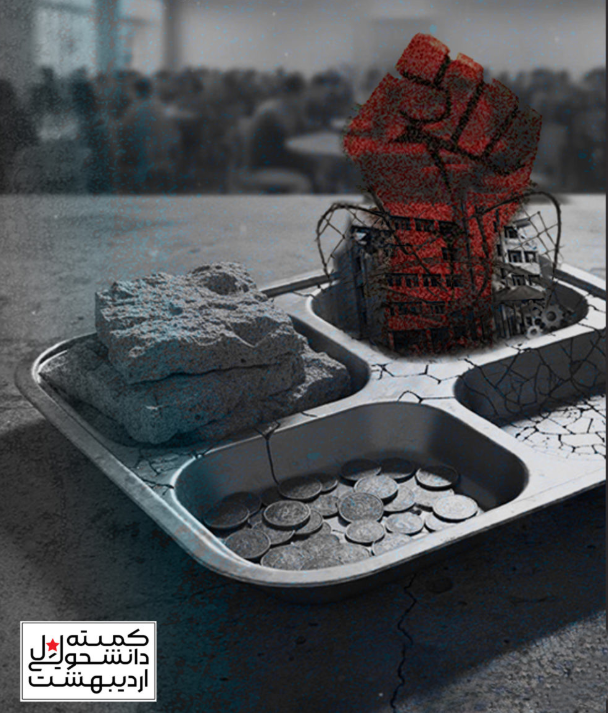
Neoliberal Assault, the Exclusion of the Subaltern, and Depoliticization
In the past, exclusion from higher education and structural educational marginalization in Iran were largely confined to urban peripheries, rural areas, migrants, and religious and ethnically oppressed groups. In recent years, however, this systematic exclusion has expanded to encompass the majority of society, including large sections of the middle class. Today, we are not simply facing educational inequality. We are confronting a hyper-classed university that seeks to produce a fully homogeneous and socially selected academic environment. According to striking official statistics, more than half of the students enrolled in Iran’s leading public universities now come from the top two income deciles, that is, the bourgeoisie. At the same time, the children of the subaltern and the working class have been reduced to a tiny and steadily shrinking minority.
This demographic engineering means that the children of the subaltern are excluded long before they ever reach the university gates. The comprehensive marketization of pre-university education is the main reason. This includes the expansion of private fee-paying schools, non-profit private schools, and the increasingly mafia-like system surrounding university entrance exam preparation and admission. Statistics from the 2021 national university entrance examination reveal the scale of this disaster. Students from the bottom seven income deciles accounted for only 16 percent of candidates ranked within the top 3,000. In other words, 84 percent of the seats in prestigious programs with real labor-market prospects had effectively already been purchased by those with economic capital.
One of the most profitable educational markets in Iran has therefore emerged outside the university itself: the university entrance examination industry. The entrance exam is no longer simply an admission test. Around it, an extensive network of educational institutions, private tutoring centers, supplementary textbooks, mock examinations, elite schools, and counseling services has developed. This network generates enormous financial profits. In this market, educational success has become a commodity that can be purchased. As a result, educational competition begins from an unequal starting point. In practice, the entrance examination has become one of the principal mechanisms for reproducing class inequality.
Over recent decades, Iran like many other parts of the world, has gradually abandoned the idea of education as a social right. It has increasingly embraced a different logic. Education is now treated as an individual investment and a commodity that can be bought and sold. In this context, the university degree has become a commodity, while the student has become a customer. For many students, the university is no longer primarily a place of learning or knowledge production. Instead, it has become one stage in an expensive and exhausting struggle to survive in an increasingly competitive labor market. From years of preparation for the university entrance examination and the rising costs of education to constant anxiety about future employment, the university has become less a space for critical thought than another phase in a prolonged economic competition.
Neoliberalism, as the dominant logic of social organization over the past several decades, has profoundly reshaped the university. It seeks to subordinate an ever-growing range of human activities to the principles of the market, competition, and profitability. Within this framework, education is no longer regarded as a social right or a public good. Instead, it is treated as an individual investment expected to generate future economic returns. This development forms part of the broader process of the commodification of social life. Capitalism depends not only on the production of commodities but also on the continuous expansion of new spheres that can be transformed into sources of profit. Education occupies a special place in this process. It has become both a market for capital accumulation and a mechanism for producing the labor force required by the economy.
The commodification of higher education means replacing the use value of knowledge with its exchange value. Knowledge is no longer valued for its capacity to understand the world, criticize the existing order, or open emancipatory horizons. It is valued only insofar as it can be converted into a degree, a job, income, rankings, academic publications, patents, or marketable products. In Iran, however, the commodification of higher education is not merely an economic process. It is embedded within the state’s political and ideological structure. The university is increasingly connected to the market, yet it remains firmly under political and ideological control. This is a significant feature. In many countries, market-oriented reforms have advanced under the banner of university autonomy, free competition, and reducing the role of the state. Businesses have gained greater influence over educational and research priorities. Iran follows a similar trajectory. State funding has declined, and the “needs of the market” increasingly shape university agendas. Yet state intervention has not diminished. Universities are expected to operate like businesses. At the same time, decisions regarding faculty recruitment, academic programs, science policy, and political control remain subject to state institutions. This can be described as a hybrid model of academic capitalism. In this model, privatization, revenue generation, and market logic coexist with ideological control, restrictions on academic freedom, and top-down governance. Similar tendencies can also be observed in European models. For example, public universities in Germany still invoke the Humboldtian tradition. In practice, however, they are increasingly driven toward neoliberal restructuring through internationalization, competition, branding, and the demands of the labor market.
In Iran, the privatization of higher education has taken many forms over the past decades. The expansion of the Islamic Azad University, self-financed university campuses, non-profit private universities, and various tuition-based programs are only some examples. Under these conditions, the university is no longer an institution primarily responsible for meeting society’s educational needs. It is expected to generate its own financial resources, recruit students, reduce costs, and increase its economic efficiency. This explains why, in recent years, even public universities have expanded tuition-based programs, increased student service fees, and shifted a growing share of educational costs onto students themselves. As a result, the distinction between public and private universities has gradually become blurred.
This process is also visible in the treatment of international students. In recent years, public higher education has increasingly become a market for recruiting fee-paying students. Although public education continues to be officially presented as a universal right, access to it carries different costs for different social groups. Non-Iranian students, including Afghan migrants, are often required to pay tuition fees that Iranian students do not pay. In this way, individuals’ legal status and citizenship have become factors in determining the price of access to education. Under such conditions, the university functions as a provider of services whose prices vary according to the economic and legal status of its clients.
As noted above, this neoliberal assault does not stop at pre-university filters. For the small minority of working-class students who miraculously overcome the university entrance examination, bureaucratic mechanisms of material exclusion become active within the university itself. The reduction of the maximum permitted period of study, the outsourcing of welfare services, the transfer of cafeterias and dormitories to private contractors, and the sudden and dramatic increase in meal prices and self-financed dormitory fees are all material instruments of this silent expulsion.
At first glance, the maximum permitted period of study appears to be merely an administrative rule that determines the length of degree programs. In practice, however, it transforms education time itself into an economic variable. Students who are unable to graduate within the prescribed period, for reasons ranging from financial hardship and the need to work while studying to illness, family responsibilities, or even deficiencies in the university’s own educational system may continue their studies only by paying substantial additional fees. It is no longer education alone that has become commodified. Time itself is assigned an economic value.
This issue is especially significant for students from subaltern backgrounds. A large proportion of students today are forced to work while studying. Many spend part of their time in temporary and low-paid jobs simply to cover rent, transportation, and everyday living expenses. Under such conditions, it is only natural that the duration of their studies will increase. Yet instead of recognizing this social reality, the educational system individualizes delayed graduation and penalizes students through additional financial charges.
Although the intensity and form of these developments vary across countries, elements of the same logic can also be observed in Europe, including Germany. German universities have increasingly come under pressure to pursue efficiency and market-oriented reforms. Rising student living costs, the housing crisis, pressure to shorten and intensify degree programs, and reductions in funding for public student services are all part of this trend. At the same time, the German government allocates billions of euros to the military and the defense industry, while universities and student services face persistent budget shortages. This raises an important question: why are enormous financial resources always available for militarization, while discussions of education, student housing, and public services are constantly framed in terms of budget constraints?
Within such a structure, the depoliticization of students occurs through a transformation of their language and life horizons. Terms such as skills development, entrepreneurship, employability, competitiveness, university-industry collaboration, and educational quality appear neutral, or even positive. In practice, however, they redefine the student as an economic unit. Students are expected to manage themselves as personal enterprises. They must optimize their time, acquire marketable skills, build professional networks, maintain both body and mind in a state of competitiveness, and interpret their failures not as products of class and political structures but as the result of personal inadequacy or insufficient effort. This is the neoliberal homo economicus: an individual who evaluates all social relations through the logic of profit, cost, efficiency, and competition.
At the same time, the neoliberal university does not merely transform students into human capital. It also produces a new type of academic worker. The mushroom-like expansion of private higher education institutions has not solved the employment problem. Instead, it has created a new group of unemployed, underemployed, and precariously employed graduates. This group can be understood as part of the research proletariat. In Iran Contrary to the official image of highly skilled professionals, members of this new proletariat are often forced to sell their intellectual labor in the markets for thesis writing, ghostwriting, translation, anonymous research projects, and other forms of precarious academic work. Adjunct lecturers, researchers without permanent contracts, graduate students, ghostwriters of theses, temporary administrative staff, and university service workers all occupy different positions within the same class structure. Yet the official ideology of the university conceals these connections. Students are encouraged to believe that their only concern is their own future employment. Precariously employed academics view their insecurity as an individual problem. University cleaners and cafeteria workers are not even recognized within the political horizon of the university.
The same logic of precarization can also be observed in Germany. A large proportion of non-professorial academic staff work under fixed-term contracts and face highly uncertain career prospects. At this point, the question of university workers becomes central. The privatization and outsourcing of university services from cafeterias and dormitories to cleaning and security constitute another dimension of the same logic of commodification. By outsourcing these services to private contractors, the university denies its direct responsibility for these workers. They are physically present on campus every day, yet legally and politically they are defined as being “outside” the university. They are visible, but they are not heard. This exclusion is not merely the exclusion of one occupational group. It is the elimination of the possibility of linking student struggles with workers’ struggles. When students understand themselves as human capital, they no longer see university workers as sharing the same fate. Instead, they perceive them as part of the university’s service infrastructure. The language of the market—quality, efficiency, evaluation, employability, and the Third Mission—conceals class antagonism and reduces it to a matter of individual choice. In Italy, reforms inspired by New Public Management and the Third Mission have similarly enabled a transition from centralized governance to a quasi-market model, without the state actually withdrawing from its role as regulator and evaluator. In this respect, an important similarity between Iran and European universities is that the market is constructed not in opposition to the state, but largely through the state and under state management.
In this sense, the depoliticization of the university should not be understood only as the direct suppression of student organizations, the repression of activists, or the closure of spaces for protest. A deeper form of depoliticization occurs when the very meaning of being a student is transformed. Under these conditions, students no longer see themselves as members of a political community or as subjects engaged with society’s collective future. Instead, they become individuals expected to invest in themselves, acquire marketable skills, build competitive résumés, and compete in the labor market. This is the trap of human capital. It is a trap that understands education not as a social right, not as a space for critical thought, and not as a possibility for collective emancipation, but as an individual investment aimed at increasing the exchange value of one’s labor power.
Depoliticization, therefore, does not mean the absence of politics. It means the dominance of the ruling class’s politics in an apparently non-political form. When students see themselves as capital, they no longer understand tuition fees, the quality of education, the exclusion of the subaltern, class inequality, or the exploitation of university workers as collective political issues. They learn that they must outperform others rather than stand in solidarity with them. Relationships among students are transformed from political and collective relations into competitive ones. In such an environment, even anxiety, burnout, and loneliness cease to be understood as political conditions. They are reduced instead to personal problems, psychological weakness, or failures of individual self-management.
Ultimately, what connects these experiences across different parts of the world is the shared logic of neoliberalism. It transforms education from a social right into a commodity that can be purchased. It transforms students into human capital. It transforms the university into an institution that reproduces the needs of capital and consolidates its logic. Against this process, defending public, free, and accessible education is not merely a professional demand. It is part of the broader struggle against the domination of capital over social life.
At the same time, the struggle against the class-based university in Iran cannot be confined to welfare demands within academia. Moving beyond the current situation requires the systematic exposure of this architecture of exclusion. It also requires linking student resistance with workers’ movements, teachers’ movements, and all those excluded by the expanding barriers of educational commodification. Only by dismantling this class fortress and reclaiming the university as a universal and emancipatory institution can it become possible to resist the simultaneous assault of capital and despotism.
The neoliberal university is an isolated fortress. It not only severs its organic ties with the streets and the living social layers surrounding it, but also portrays the working-class neighborhoods around it as security threats. This is the point where economic exploitation and security repression become inseparable. A university whose class composition has been deliberately homogenized will inevitably be deprived of solidarity. The commodification of education and the exclusion of the subaltern constitute the essential precondition for the depoliticization of the university. Students from affluent backgrounds who occupy its seats increasingly view the university not as a site of social transformation but as a means of securing their own careers and individual well-being.
For this reason, a critique of the depoliticization of the university in Iran must go beyond a critique of repression alone. Repression is only one instrument. The deeper instrument is the reconstruction of students’ subjectivity. A depoliticized student is not necessarily someone who hates politics. Rather, it is someone who no longer recognizes politics in everyday life. Tuition fees, competition, anxiety, résumé-building, the exclusion of the subaltern, the exploitation of university workers, and an increasingly precarious future all come to be accepted as natural features of university life.
Against this condition, repoliticizing the university means rebuilding the connections between students, precariously employed academics, researchers, university workers, and the subaltern whose access to higher education has become increasingly restricted. The university becomes political again only when it ceases to function as a factory for producing human capital and is transformed into a space of class consciousness and collective solidarity. It must become a space for critical thought, collective organization, and resistance against a social order that turns everything, including knowledge and human beings themselves, into commodities.
Comment here